Why Northern Michigan Is So Great For Growing Riesling
Riesling was planted on Old Mission Peninsula in 1974, when Edward O’Keefe Jr. broke ground at Chateau Grand Traverse. Fifty-two years later, Northern Michigan grows some of the most distinctive Riesling outside Europe. The reasons are mostly geographic. Latitude, glacial geology, and one very big lake do most of the work. The winemakers spent the last half-century figuring out what to do with all that.
It Starts With the Latitude
Old Mission Peninsula and the Leelanau Peninsula both sit at the 45th parallel. That’s the same line of latitude that runs through Germany’s Mosel Valley, Alsace, and the northern edge of Burgundy. It’s not accidental. The 45th parallel marks roughly the upper limit of the cool-climate band where wine grapes ripen reliably in the northern hemisphere, and Riesling in particular wants exactly what that latitude offers: long summer days, slow ripening, cool nights that preserve acidity, and a long fall window before the killing frost arrives.
Push much further north and you lose ripening. Push much further south and Riesling turns flabby and loses its aromatic edge. Northern Michigan sits right in that band.
The Lake Effect Is Doing the Heavy Lifting
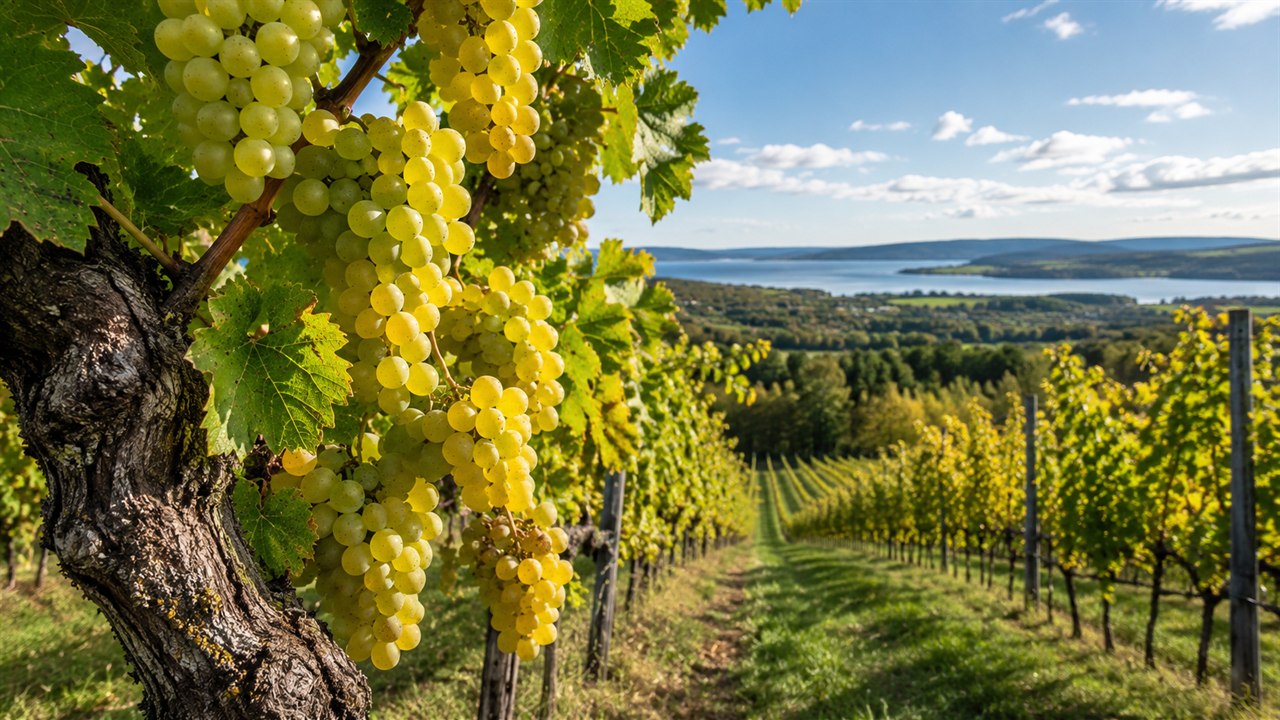
Latitude alone wouldn’t make this work. Vermont, Montana, and Quebec all sit near the 45th parallel too, and none of them grow Riesling at scale. What Northern Michigan has that they don’t is water – specifically Grand Traverse Bay, which wraps around both peninsulas and acts as a massive thermal moderator.
The bay rarely freezes solid. In winter, it releases enough stored summer warmth to keep vineyard air temperatures several degrees above what they’d be inland, which is often the difference between vines that survive January and vines that don’t. In spring, the cold bay water delays soil warming, which delays bud break by a week or two. That delay is critical. It pushes bud break past the last hard frost, protecting the year’s crop before it has a chance to form.
In summer, the bay cools afternoon highs and warms overnight lows, narrowing the daily temperature swing and slowing ripening. In fall, it holds onto enough summer warmth to extend the growing season into mid-October, giving the grapes three or four extra weeks of hang time that Iowa and Minnesota will never see.
Glacial Soils Riesling Quietly Likes
What the glaciers left behind matters too. The last ice age scraped through what’s now southern Canada and northern Michigan and deposited a complicated layer cake of soil: sandy loam, gravel, clay lenses, scattered limestone outcrops. The result is moraine soil with excellent drainage, which Riesling vines reward. Riesling hates wet feet. It wants soil that drains hard between rains and forces roots to dig deep for water and nutrients.
The mineral diversity matters too. Old Mission’s eastern slopes carry more limestone influence than the western side. Some Leelanau sites sit on sandier, gravel-heavier ground that drains even harder. Winemakers who work those differences end up with single-vineyard Rieslings that taste meaningfully different from the next vineyard over, even when both are within a 10-mile drive.
Compare that to the Mosel’s blue slate or California’s red clay and you’re talking about a different mineral signature. Not better, not worse. Geology is geology.
The Producers Who Got There First
Chateau Grand Traverse planted Riesling on Old Mission in 1974, the first commercial Riesling vineyard in the region. Old Mission Peninsula AVA was approved in 1987; Leelanau Peninsula AVA came earlier in 1982 (only the second AVA in Michigan, petitioned by Larry Mawby of L. Mawby Vineyards). AVA designation isn’t a bureaucratic flourish – it’s federal recognition that the geography produces wines distinguishable from the rest of Michigan, with defined boundaries on what can carry the regional name on the label.
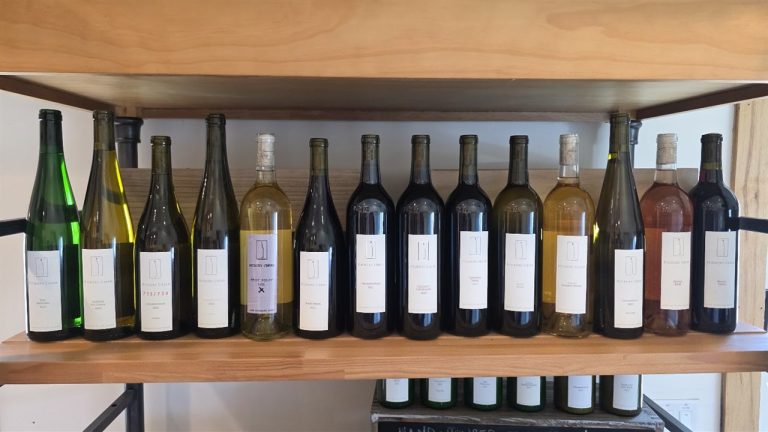
The region now has thirty-six wineries across the two peninsulas (eleven on Old Mission, twenty-five on Leelanau), and Riesling is the most-planted white variety on both. Producers worth knowing by name: Chateau Grand Traverse, 2 Lads Winery, Bowers Harbor Vineyards, Brys Estate, Bonobo Winery, Black Star Farms, and Bel Lago Vineyards. L. Mawby on Leelanau focuses on sparkling but makes a Riesling-based pet-nat worth the detour.
A 2 Lads dry Riesling and a Brys late-harvest from the same vintage taste like wines from two different regions, not two vineyards a few miles apart. The differences come down to harvest timing and residual sugar – pick early and ferment to dry and you get bone-dry Alsace-style; pick later, stop fermentation before all the sugar converts, and you get the off-dry style Mosel Kabinett drinkers recognize; let botrytis settle in or let the grapes hang into freezing weather and you’re at late-harvest or ice wine. The same producer often makes three or four of these in a single vintage from the same vineyard. Buy across that lineup and you get the full range of what Northern Michigan Riesling does.
Where the Mosel Comparison Holds – and Where It Doesn’t
Wine writers throw the Mosel comparison around with Northern Michigan Riesling more than they should. The comparison has roots in real things: shared 45th-parallel latitude, cool-climate ripening, and an acid-driven style at modest alcohol (usually 10-12% ABV here, similar to a Mosel Kabinett). Those parallels are genuine.
What’s not parallel: the Mosel is built on Devonian blue slate, with steep south-facing river-valley slopes shaped over 2,000 years of viticulture. Northern Michigan is built on glacial moraine, with rolling peninsular slopes and a 50-year commercial wine history. Different rocks, different time. The wines reflect that. A Mosel Riesling carries a stone-fruit-and-petrol minerality that comes from slate. A Northern Michigan Riesling carries more of an orchard-fruit profile with a saline thread the lake gives it.
Northern Michigan doesn’t need to be the Mosel. It’s doing something specific to its own geography, and the wines are better when winemakers lean into that instead of trying to mimic Germany.
What This Means For the Bottle You Buy
If you’re picking a Northern Michigan Riesling off a shelf or a tasting-room counter, the most useful thing on the label is the AVA. AVA stands for American Viticultural Area – the federal designation for a wine-growing region with distinctive geography. “Old Mission Peninsula AVA” or “Leelanau Peninsula AVA” tells you the fruit came from one of the two peninsulas where the lake effect actually does what this article describes. A bottle labeled just “Michigan” can come from anywhere in the state, including sites that don’t share the same geographic advantages.
The best way to understand what Northern Michigan Riesling does is to buy three bottles from a single producer in a single vintage: a dry, an off-dry, and a late-harvest. Chateau Grand Traverse, Brys Estate, and Bonobo all make those three styles consistently and at prices ($18-30 for the dry and off-dry, $25-45 for the late-harvest) that respect a household budget. Taste them in order on a Saturday afternoon and you’ve sampled what the region actually does, dry to dessert.
Both peninsulas hang off Traverse City. The drive is about four hours from Detroit, six from Chicago, and well within reach for most of the Midwest. The reason a $22 Northern Michigan Riesling competes with a $45 German one comes down to economics. The lake effect handles work a California vineyard manager pays for with cooling towers, hillside planting, and meticulous canopy management. Northern Michigan winemakers get that labor for free from the bay, and the savings show up on the price tag.